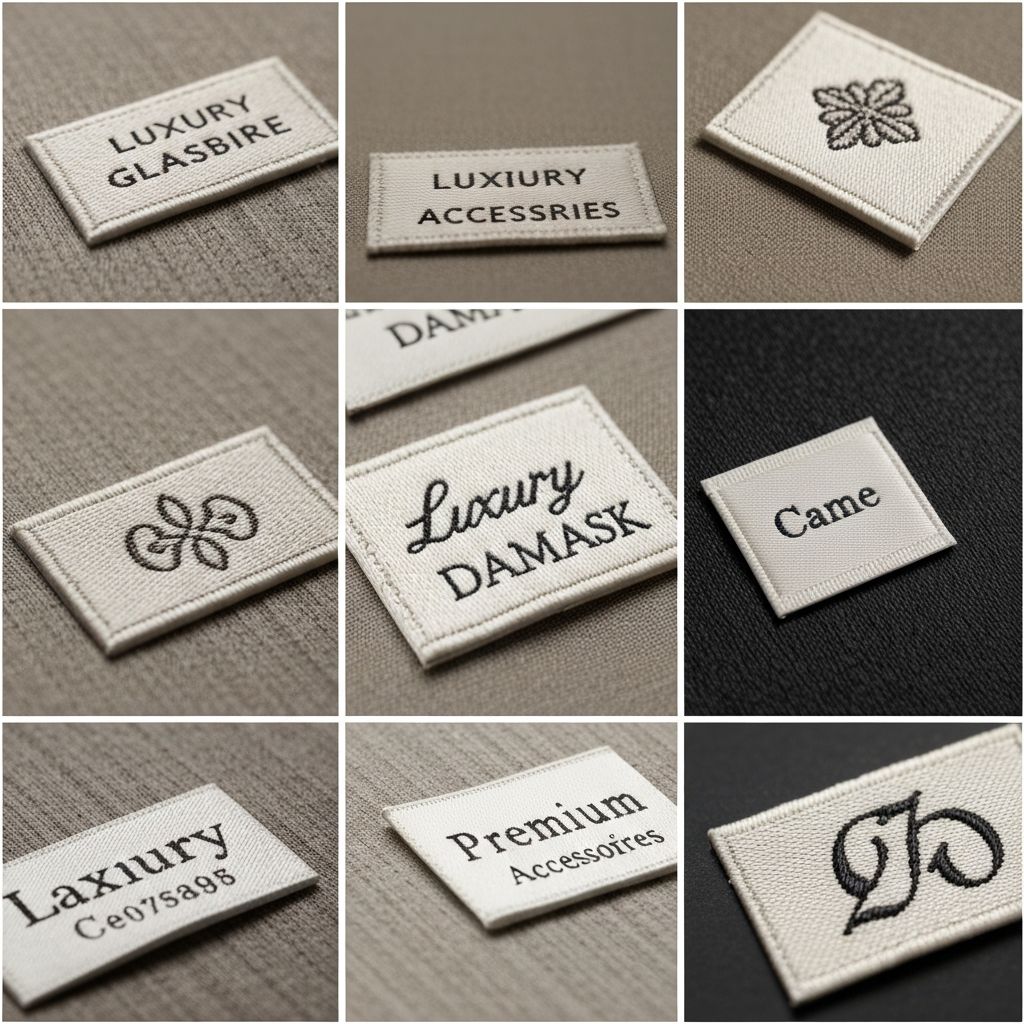
Beyond the Gloss: Decoding Woven Label Materials for Garment Brands That Want the Right Hand Feel
Satin vs. taffeta vs. damask, cotton vs. polyester vs. nylon — a practical selection framework
The Label Is the Last Thing a Customer Sees—and the First Thing They Judge
Walk into any boutique clothing store. A customer picks up a shirt, checks the price tag, then instinctively flips the collar to touch the label. That two-second gesture is not random. The hand feel of a woven label sends an immediate signal about garment quality—and by extension, brand positioning.
One frustrating pattern I keep seeing: sourcing teams getting fixated on label artwork while neglecting the substrate. A beautiful logo woven on the wrong material ends up scratching necks, fraying after ten washes, or looking cheap against a premium garment.
Woven Label Weave Types: Satin, Taffeta, and Damask
Before discussing materials, we need to understand weave structures. The same polyester thread woven as satin feels entirely different from polyester woven as damask. Thread count per square inch determines resolution, softness, and light reflectivity.
Satin Woven Labels: Glossy and Decorative
Satin woven labels have the shiniest appearance among the three weave types. They are produced using a satin weave structure where warp yarns float over multiple weft yarns before interlacing, creating long surface floats that reflect light evenly. This gives satin labels a lustrous, premium look that many brands associate with luxury.
But there is a trade-off. Satin labels have a lower thread count relative to damask, which means they are better suited for simpler designs rather than intricate logo work. The hand feel is smooth but slightly stiffer—some people describe it as "sturdy" compared to the soft drape of damask.
Taffeta Woven Labels: Matte and Economical
Taffeta woven labels provide a non-reflective, matte finish. The taffeta weave is a plain weave structure where warp and weft threads interlace in a simple over-one-under-one pattern. This produces a crisp, flat surface with no visible sheen.
Taffeta labels are durable and very pliable, making them suitable for garments that need a label with flexibility—think canvas backpacks, outerwear, and heavy fabrics. They are also a cost-effective option when ordered in bulk.
Damask Woven Labels: High-Definition and Soft
Damask woven labels are the most widely used type in modern apparel branding. They are woven at the highest thread density among the three weave types, using polyester threads packed tightly together. This high thread count enables extremely detailed logos, fine text, and intricate artwork to be reproduced sharply.
Weave Type Comparison
| Property | Satin Woven Label | Taffeta Woven Label | Damask Woven Label |
|---|---|---|---|
| Weave Structure | Satin (long float) | Plain (1×1) | High-density jacquard |
| Surface Appearance | Glossy, high-shine | Matte, flat | Slightly reflective, soft sheen |
| Thread Count | Low | Medium | High |
| Hand Feel | Smooth, slightly rigid | Crisp, pliable | Soft, flexible |
| Design Detail Capability | Limited—best for simple designs | Moderate—acceptable for basic logos | Excellent—sharp fine text and complex logos |
| Typical Cost (per piece, 1,000 pcs) | $0.03–$0.08 | $0.04–$0.10 | $0.06–$0.12 |
| Best Use Case | Decorative accents, care labels, high-shine branding | Bags, outerwear, heavy fabrics, budget-conscious runs | Neck labels, brand logos, detail-critical apparel |
Material Showdown: Cotton vs. Polyester vs. Nylon
Weave structure is only half the story. The fiber itself—cotton, polyester, or nylon—dictates wash durability, skin sensitivity, color retention, and environmental footprint. A cotton damask label and a polyester damask label look similar in a swatch book, but after 30 industrial wash cycles, the difference is unmistakable.
Cotton Woven Labels
Cotton woven labels are crafted from natural cellulose fibers. They offer a soft, breathable, skin-friendly finish that makes them ideal for intimate apparel, baby clothing, and garments marketed as eco-conscious products.
Advantages: naturally biodegradable, feels comfortable against sensitive skin, delivers an organic aesthetic that synthetic fibers cannot fully replicate.
Limitations: lower tensile strength than polyester, more prone to fraying along cut edges, degrades faster under frequent washing, can fade with UV exposure, offers limited resistance to moisture and mildew.
Polyester Woven Labels
Polyester is the workhorse material of the woven label industry. Known for high tensile strength and excellent resilience, polyester labels maintain their shape and integrity after repeated wear and washing. They resist fading, shrinking, and stretching, and they deliver excellent color retention for vibrant, detailed designs.
Nylon Woven Labels
Nylon woven labels occupy the high-durability, high-gloss end of the spectrum. Nylon fibers have strength superior to polyester and excellent elasticity, allowing labels to stretch without breaking. They exhibit a natural sheen that brings a sophisticated, upscale look to garments.
Nylon labels are ideal for outdoor sportswear, mountaineering gear, ski jackets, and leather goods—applications where durability under extreme conditions matters most.
Satin Woven Label vs. Cotton Woven Label: A Head-to-Head Comparison
One of the most frequent questions from startup clothing brands is whether to choose a satin woven label or a cotton woven label. The confusion is understandable—the terms overlap confusingly in common usage.
| Parameter | Satin Woven Label (Polyester) | Cotton Woven Label |
|---|---|---|
| Surface Finish | Smooth, glossy, lustrous sheen | Matte, warm, organic texture |
| Hand Feel | Smooth, slightly slick; can feel stiffer | Soft, breathable, skin-friendly |
| Wash Durability (50+ cycles) | Excellent—holds shape, color, and finish | Moderate—may fray, fade, or soften excessively |
| Color Retention | High—vibrant after repeated washing | Moderate—natural fading over time |
| Skin Sensitivity Risk | Low, but less breathable | Very low—hypoallergenic, breathable |
| Sustainability Profile | Petroleum-derived (unless rPET used) | Biodegradable, renewable, compostable |
| Best Applications | Premium fashion, lingerie, decorative accents, high-shine branding | Baby clothing, organic apparel, comfort-first garments, eco-conscious brands |
| Price Range (per piece, 1,000 pcs) | $0.03–$0.08 | $0.05–$0.10 |
Matching the Material to the Garment: A Practical Selection Framework
Based on years of working with apparel brands and garment accessories manufacturing partners, here is a decision framework for clothing woven label selection:
- High-frequency wash garments (uniforms, activewear, workwear, hotel linens): Polyester damask or nylon taffeta labels. These survive industrial laundering, retain legibility, and resist edge fraying.
- Skin-contact priority garments (baby clothing, lingerie, sleepwear, allergy-sensitive wear): Cotton woven labels or organic cotton labels. The breathability and hypoallergenic properties matter more than maximum durability.
- High-shine luxury branding (evening wear, bridal, premium fashion): Satin woven labels in polyester or acetate. The glossy finish communicates luxury visually and tactilely.
- Outdoor and extreme-use gear (ski wear, hiking apparel, functional outerwear): Nylon woven labels. Superior tensile strength and elasticity handle extreme mechanical stress.
- Budget-conscious bulk runs (fast fashion, promotional merchandise, basic tees): Taffeta woven labels in polyester. Cost-effective at volume while delivering acceptable durability.
- Eco-positioned brands (sustainable fashion, organic cotton lines, circular-economy labels): Recycled polyester damask or organic cotton labels. Both support sustainability claims without compromising label integrity.
Cost and Market Context
Price is never irrelevant, but the unit-cost difference between label materials is small enough that the decision should rarely be purely price-driven. Woven damask labels typically cost US$0.06–$0.12 per piece at quantities of 1,000 pieces, while printed satin labels fall in the US$0.03–$0.08 range.
The Real Cost of Getting It Wrong
I have seen brands order 10,000 cotton woven labels for a denim line that would go through enzyme washes and stone washing—only to watch the labels disintegrate. I have seen luxury brands put stiff satin labels inside delicate silk blouses and deal with customer returns because of neck irritation.
The lesson: material selection for woven labels is not a cosmetic afterthought. It is a functional engineering decision that affects product durability, wearer comfort, brand perception, and return rates. Choose the wrong material, and the label becomes the reason a customer does not buy again. Choose the right one, and the label quietly reinforces quality every time someone wears the garment.
Need Custom Garment Accessories?
From hang tags to woven labels, we manufacture premium garment accessories tailored to your brand's needs.
Get a Free Quote