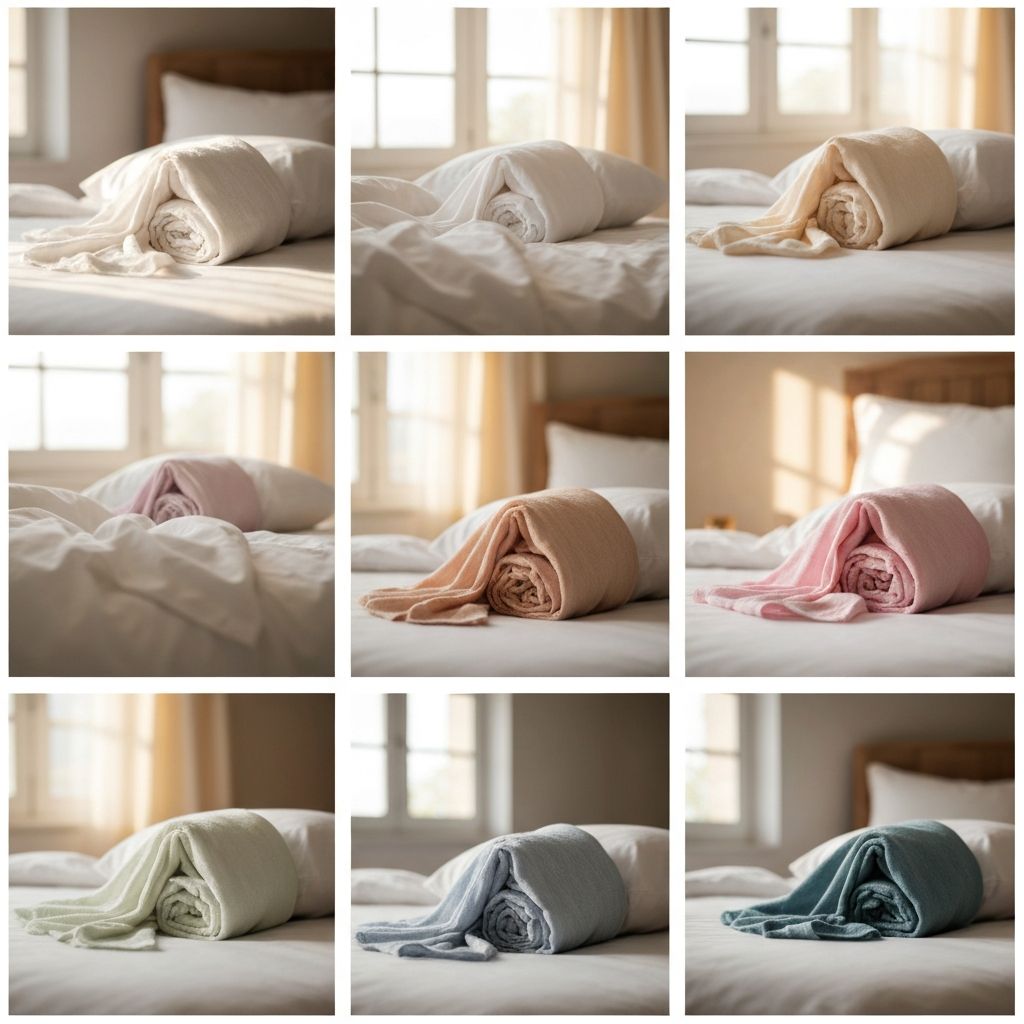
Why Your Pajama Fabric Choice Is Actually a Science — And Why It Matters for Your Sleep
Exploring the textile science behind sleepwear fabrics and the hidden role of garment accessories
The Hidden Science in Your Nightwear
Most people pick pajamas based on how they look or feel in the store. That's fine. But there is an entire layer of material science underneath that you probably never thought about—and your sleep quality depends on it.
We are talking about how a pajama set fabric interacts with your body's microclimate at 3AM. Whether it breathes. Whether it wicks moisture. Whether it keeps your skin pH balanced or triggers irritation. These things are not marketing fluff. They are measurable, testable fabric properties that separate a genuinely comfortable night from a restless one.
Why Fabric Science Matters for Sleep Quality
Three fabric properties determine which side you are on:
- Breathability—how easily air moves through the fabric structure
- Moisture-wicking—the fabric's ability to pull sweat away from skin and evaporate it
- Thermal conductivity—how fast heat transfers through the material
Get these wrong, and you will wake up damp, overheated, or both. Get them right, and you won't think about your pajamas at all—which is exactly the point.
Silk: The Natural Thermoregulator
Silk is a protein fiber produced by silkworms, primarily the domesticated Bombyx mori. The fiber is composed largely of fibroin, which gives silk its signature smoothness and strength.
What makes silk exceptional for pajama set fabric is not just the luxury feel. It is the thermoregulation. Silk absorbs about 30% of its weight in moisture, but more importantly, it excels in moisture vapor transmission—meaning sweat passes through the fabric and evaporates rather than soaking into it.
Other documented properties:
- Naturally hypoallergenic and resistant to dust mites, mold, and fungal growth
- Contains natural proteins and amino acids that help retain skin moisture
- Smooth fiber surface reduces friction against skin and hair, minimizing creases and breakage
Silk also has a lower thermal mass than cotton, meaning it heats up and cools down more quickly in response to body temperature fluctuations. In a controlled study referenced by the National Sleep Foundation, participants wearing silk pajamas reported fewer heat-discomfort awakenings compared to cotton wearers, particularly in sleep environments above 22°C (72°F).
A Word on Satin: It's a Weave, Not a Fiber
Before we go further, let's clear a common confusion.
This matters because:
- Silk satin retains all the natural breathability and skin benefits of silk.
- Polyester satin traps heat and moisture. It is non-porous, can generate static electricity, and may increase risk of night sweats and bacterial buildup.
If your priority is comfort and sleep hygiene over pure aesthetics, always check the fiber content label. "Satin" alone tells you nothing useful.
Cotton: The Everyday Champion With a Hidden Flaw
Cotton is, and probably always will be, the most popular sleepwear fabric worldwide. The fiber is natural, highly breathable, hypoallergenic, and machine-washable—all legitimate advantages.
But there is a catch.
Cotton absorbs moisture extremely well—up to 27% of its weight in water. That sounds like a good thing until you realize what happens next: once saturated, cotton releases that moisture very slowly. The fabric stays damp and clings to skin, creating a humid micro-layer that can actually increase heat retention, especially in humid climates.
Pro tip: Organic cotton varieties reduce exposure to chemical residues and are gentler on sensitive skin. A 2025 industry report shows 27% growth in online demand for sustainable loungewear, reflecting rising consumer preference for certified organic textiles.
Bamboo Fiber: The Eco-Conscious Newcomer
Bamboo fiber has entered the sleepwear market with bold claims: softer than silk, cooler than cotton, antibacterial, sustainable. The reality is more nuanced—but genuinely promising.
There are several types of bamboo textile, and they are not created equal:
- Bamboo viscose (rayon): The most common type. Bamboo pulp is chemically dissolved and extruded into fibers. The result is incredibly soft and moisture-wicking, but the chemical processing limits its eco-credibility.
- Bamboo lyocell: Made using a closed-loop process that recycles solvents. Significantly more eco-friendly than viscose. The preferred choice for brands serious about sustainability.
- Bamboo linen: Produced mechanically with minimal chemicals. Rougher texture, rarely used in sleepwear.
Performance-wise, bamboo fiber genuinely delivers. It wicks moisture approximately three times better than cotton. The natural micro-gaps and porous structure allow excellent airflow and heat diffusion. Additionally, bamboo contains a natural antimicrobial bio-agent known as "Bamboo Kun," which inhibits bacterial growth—a meaningful benefit for sleepwear worn in warm conditions.
Garment Accessories: The Silent Craftsmanship
Here is something most fabric guides completely ignore: the fabric is only part of the pajama experience.
Think about the elastic waistband that digs into your side when you sleep on your stomach. Or the scratchy label that irritates your neck. Or buttons that crack after three washes. These are all garment accessories failures—and they are just as important as fabric choice.
In the sleepwear industry, quality-conscious brands work with specialized garment accessories manufacturers to source components that match the fabric's comfort profile. Common accessory categories include:
- Labels and tags (woven, printed, or heat-transfer)—increasingly using soft-touch materials or tagless designs to reduce skin irritation
- Elastic bands—critical for waistbands and cuffs; must maintain stretch recovery after repeated washing
- Buttons—for pajama sets with front plackets; materials range from natural shell and wood to durable nylon and resin
- Hang tags and packaging supplies—often overlooked but important for brand presentation
The best pajama set in the world, made from premium mulberry silk, becomes unwearable if paired with a cheap, stiff elastic band that loses tension after two laundry cycles. Fabric science and accessory engineering must work together.
Comparative Data at a Glance
| Property | Silk (Mulberry) | Cotton (Standard) | Bamboo (Viscose/Lyocell) | Polyester Satin |
|---|---|---|---|---|
| Moisture absorption | ~11–30% of weight | Up to ~27× its weight | Moderate to high | Low (non-porous) |
| Moisture-wicking speed | Fast | Slow | Very fast (≈3× cotton) | Minimal |
| Breathability | Good | Excellent | Very good | Poor |
| Thermal regulation | Adaptive (dynamic) | Passive (insulates when damp) | Good (stable microclimate) | Poor (traps heat) |
| Hypoallergenic | Yes (natural) | Yes (especially organic) | Yes (natural antibacterial) | No |
| Eco-footprint | Moderate (labor-intensive) | Moderate to high | Low to moderate (lyocell best) | High (petroleum-based) |
| Durability (with care) | 5–10 years | High | Moderate (pilling possible) | Moderate |
| Care difficulty | Delicate (handwash/dry clean) | Easy (machine washable) | Easy to moderate | Easy (but degrades faster) |
Final Thoughts: Comfort Meets Craftsmanship
Choosing a pajama set is not about picking the "best" fabric in absolute terms. It is about matching fabric properties to your sleep environment, skin sensitivity, and values.
- If you run hot and want natural luxury, silk is unmatched for thermoregulation.
- If you prioritize affordability and easy care, cotton still makes sense—just know its moisture-retention limits.
- If sustainability and all-season comfort drive your decisions, bamboo fiber homewearis a genuinely smart pick, especially certified lyocell.
And whatever fabric you choose, pay attention to the garment accessories—the elastic, the labels, the stitching quality—because these details determine whether your pajamas feel good at hour one and hour three hundred.
Need Custom Garment Accessories?
From hang tags to woven labels, we manufacture premium garment accessories tailored to your brand's needs.
Get a Free Quote