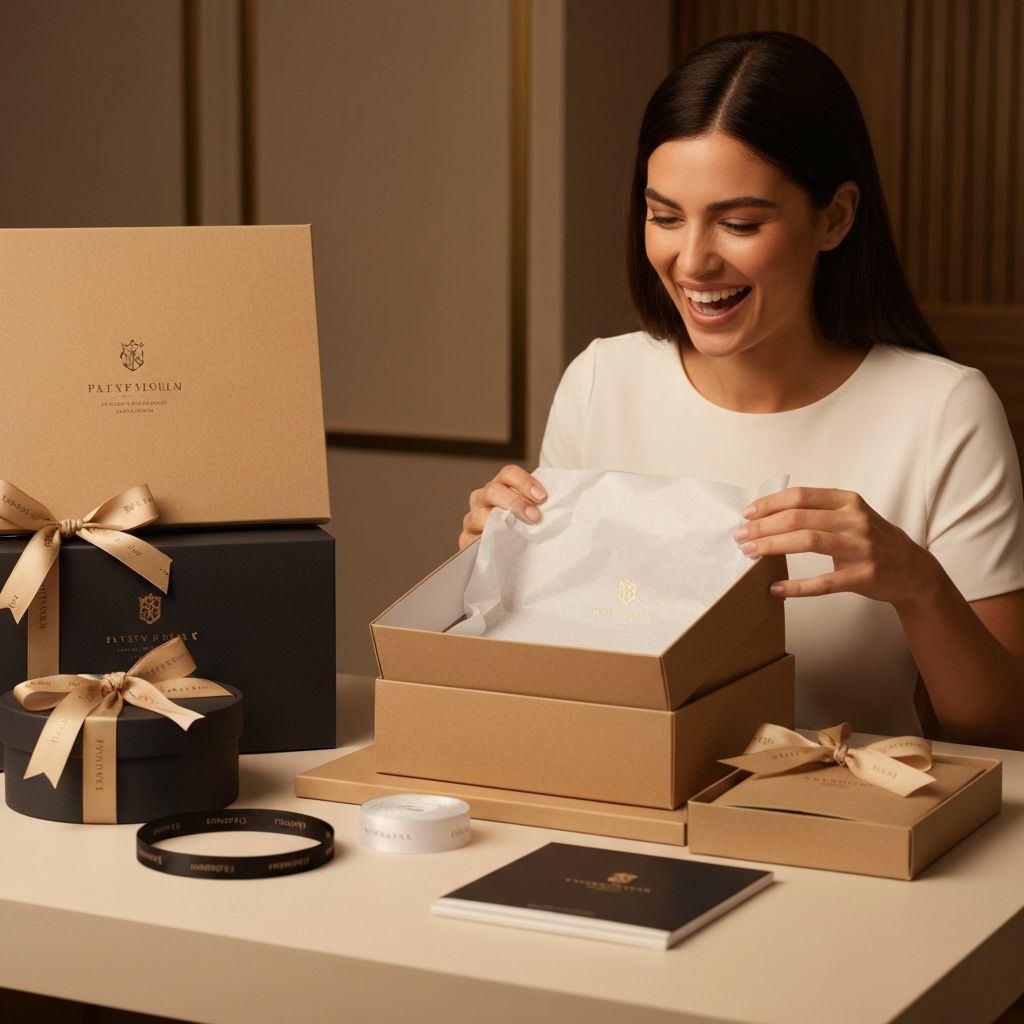
The Packaging That Keeps Your Brand Alive — Long After the Box Is Opened
How gift boxes, shopping bags, and dust bags create brand rituals that drive customer loyalty
Introduction: Why the Box Stays and the Product Goes
Nobody keeps the shipping carton. It goes straight to the recycling bin—if you are lucky. But a well-designed garment box? That stays. It sits on the dresser. It gets reused for storage. It becomes the thing the customer remembers when the garment itself is just another item in the wardrobe.
That is the difference between logistics packaging and experience packaging. In fashion, the package is often the first physical touchpoint between a brand and a customer. Not the product—the package. In e-commerce, where the shopper cannot touch fabric or check stitching before purchase, this first impression carries even more weight.
How Much Does Unboxing Actually Matter? A Look at the Numbers
A 2024 consumer survey found that 47% of shoppers said a premium unboxing experience makes them more excited about opening a package. Even more telling: 41% said it makes them want to purchase from the brand again—a 14-point jump over the previous year.
A study published in the Journal of Consumer Psychology in 2024 reported that recipients of gifts in premium packaging showed 37% higher emotional engagement and retained positive associations with the giver 22% longer than those receiving identical items in standard packaging.
The Flip Side of Bad Packaging
A negative unboxing experience—overpackaging, excessive plastic, products arriving damaged—can cost brands real money. Nearly half of consumers (47%) say it could put them off buying again. And 21% say they would boycott a retailer who does not use sustainable packaging.
The Gift Box: Where Brand Ritual Begins
The global gift boxes market was valued at $1.78 billion in 2024 and is expected to reach $2.91 billion by 2030, growing at an 8.5% CAGR—significantly faster than the broader packaging market.
A rigid box with a magnetic closure does something a folding carton never will: it slows the customer down. The lid resists slightly. There is weight. There is a deliberate reveal—peel back tissue paper, lift a compartment insert, discover the garment folded with intention. Each step adds a half-second, and each half-second builds anticipation.
What Customization Actually Means
| Packaging Element | Basic Option | Premium Option | What the Upgrade Does |
|---|---|---|---|
| Box structure | Folding carton, single wall | Rigid box, wrapped board, magnetic closure | Adds weight, permanence, and reuse value |
| Surface finish | Uncoated, basic CMYK print | Soft-touch matte lamination, spot UV, foil stamp | Signals quality before the box is opened |
| Interior lining | None or basic paper insert | Fabric-lined tray, molded pulp fitment | Creates the "reveal moment" during unboxing |
| Tissue paper | Standard white tissue | Custom-printed, acid-free tissue with brand pattern | Extends the unwrapping ritual |
| Assembly logic | Garment folded into box | Garment wrapped in tissue, placed in fitted tray, sealed with brand sticker | Builds layering and anticipation |
The Sustainability Tension
A 2024 study noted that when recipients learned their premium packaging generated over 1.2kg of non-recyclable waste, the emotional uplift from the unboxing experience disappeared entirely—68% reported feeling guilt or discomfort.
The smart play is designing premium packaging that is visibly sustainable—think kraft-textured rigid boxes with foil-stamped logos that do not require lamination, or magnetic closure boxes where the magnet can be easily separated for recycling.
The Shopping Bag: The Brand Billboard Nobody Throws Away
A branded shopping bag is the most undervalued asset in garment packaging design. Unlike the shipping carton or the gift box—which may or may not be kept—a well-made shopping bag almost always gets reused. It becomes a lunch bag, a gym bag, a carry-all. Every time it is reused, the brand gets an impression.
The economics here are remarkable. A premium laminated paper bag with rope handles might cost the brand $1.50–$2.50 per unit at production scale. Over its reuse life—which for a well-constructed bag can be 30, 50, or even more uses—the cost per brand impression drops to pennies.
| Bag Type | Cost Per Unit | Reuse Potential | Brand Impression Value |
|---|---|---|---|
| Basic plastic bag | $0.10–$0.30 | Very low—single use | Negative—increasingly associated with waste |
| Standard kraft paper bag | $0.40–$0.80 | Low—3–5 uses before handle failure | Neutral—functional but forgettable |
| Laminated art paper bag | $1.00–$2.50 | Medium to high—10–30 uses with care | Positive—good surface for brand visibility |
| Fabric/canvas tote bag | $2.00–$5.00 | Very high—50+ uses, machine washable | Excellent—becomes personal accessory |
The Dust Bag: After-Purchase Utility That Builds Loyalty
A garment dust bag—the drawstring pouch that comes with higher-end clothing, shoes, and handbags—serves two obvious functions and one hidden one.
- Obvious function one: it protects the garment from dust, light, and moths during storage.
- Obvious function two: it protects the garment during travel.
- The hidden function:A branded dust bag that lives in the customer's closet is a daily brand reminder. Every time the customer reaches past the dust bag, the brand registers—subconsciously, persistently.
Material Selection for Dust Bags
Non-woven polypropylene (NWPP) is the dominant material in the volume segment at $0.30–$0.80 per bag. But it has a plastic-like hand feel that undermines the luxury association.
Cotton canvas and cotton-linen blends occupy the premium tier at $2.00–$5.00 per bag. The hand feel is significantly better, and the material aligns with natural-fiber positioning.
Recycled PET (rPET) fabric—spun from post-consumer plastic bottles—is the emerging middle ground. It offers a soft hand feel, costs less than cotton, and carries a strong sustainability narrative.
Integrating the Three Pieces: The Total Ritual
| Level | Component | Role in the Ritual |
|---|---|---|
| Top (unboxing) | Rigid gift box with tissue wrap, interior fitment, brand sticker | Creates the reveal moment; generates emotional response and social media content |
| Middle (post-purchase carry) | Branded shopping bag or tote | Extends brand visibility into the customer's daily life; pure impressions with zero media cost |
| Base (long-term care) | Dust bag with drawstring closure, brand mark | Maintains brand presence during storage; reinforces quality perception over months and years |
Consistency Across Touchpoints
Here is a common failure mode: the gift box looks premium, but the dust bag inside is cheap non-woven material with a peeling heat-transfer logo. The shopping bag is sturdy, but the color does not match the box. These inconsistencies break the ritual.
What Garment Trim Manufacturers Must Understand
The Shift from Cost Center to Brand Asset
Fifteen years ago, packaging was a procurement problem—"how do we get this box cheaper?" Today, for any brand competing on experience rather than price alone, packaging is a brand investment. The unboxing moment is content. The shopping bag is earned media. The dust bag is a loyalty mechanism.
Quality Control as a Brand Protection Service
The packaging failure modes that destroy brand perception are predictable and preventable:
- Peeling foil on gift box lids
- Shopping bag handles that tear on first use
- Dust bag drawstrings that pull out of the seam
- Print misregistration that makes the logo look blurry
- Color variation across production batches that breaks visual consistency
Where This Is All Going
The next frontier in garment packaging design is digital-physical integration. QR codes on gift box interiors that link to garment care videos or stylist recommendations. NFC tags embedded in shopping bags that unlock loyalty rewards when tapped with a phone. RFID-enabled dust bags that help the customer track their garment collection.
Need Custom Garment Accessories?
From hang tags to woven labels, we manufacture premium garment accessories tailored to your brand's needs.
Get a Free Quote