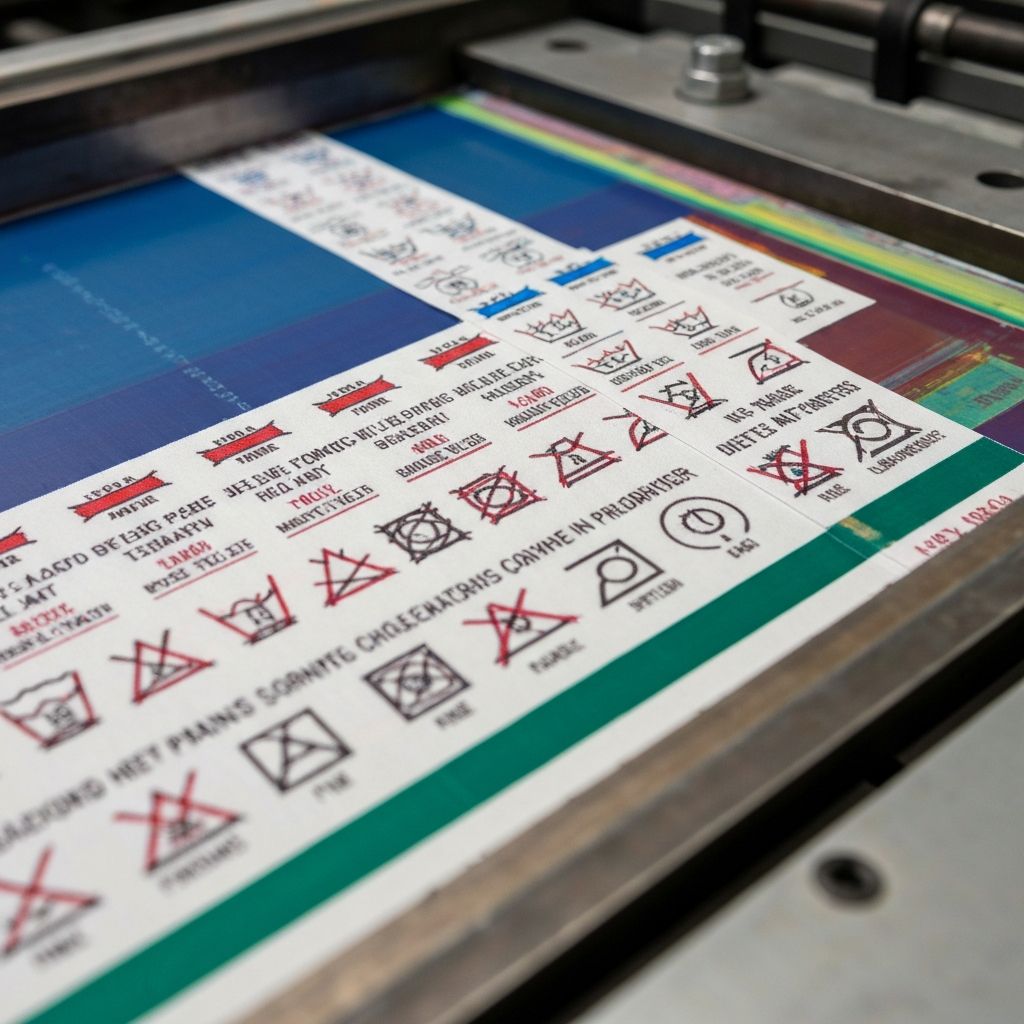
Ink Meets Fabric: How Screen, Heat Transfer, and Digital Printing Shape the Modern Clothing Label
A comprehensive comparison of the three dominant label printing technologies
Where Garment Labels Start: The Core Technologies
Walk into any clothing factory, and you'll find that the label on a garment carries way more weight than its size suggests. Care instructions, brand identity, compliance marks, size info—all of it has to survive washing machines, dryers, friction against skin, and years of wear. That's a lot to ask from a strip of fabric or film.
Right now, the garment label printing process landscape is dominated by three technologies—screen printing, heat transfer, and digital printing. They are not competing in the sense that one kills the other. They coexist because each solves a different problem for a different production scenario.
Screen Printing: The Workhorse Method
If there's one technology that has earned its stripes in the garment accessories production world, it's screen printing. Also referred to as silk screen in older shops. The mechanism is straightforward—a mesh screen is prepared for each color, ink is forced through the stencil onto the label substrate, and the result is a bold, opaque layer of color that bonds directly into the surface.
Why It Still Dominates High-Volume Orders
The biggest selling point of screen printing is its cost structure. The upfront cost sits in screen preparation—each color demands its own screen, which means time and money before a single label comes off the line. But once those screens are set, the per-unit cost drops sharply. For orders running above 500 to 1,000 pieces with a simple 1–3 color design, screen printing is almost impossible to beat on price.
The ink itself also plays a role. Plastisol-based screen inks deliver a thick, durable film that withstands industrial washing cycles, which is exactly why workwear and uniform brands keep coming back to this method. Properly cured screen prints can last decades without peeling.
The Limitations Are Real
The trouble starts when designs get complex. Every additional color means another screen, another setup charge, another round of registration alignment. If your label carries a photographic image or a gradient effect with six colors or more, screen printing becomes an expensive headache.
Heat Transfer: Flexibility Meets Full-Color
Heat transfer printing has quietly taken over a significant chunk of the clothing label market in recent years. Current industry estimates indicate that heat transfer labels account for roughly 30% of all garment label types, favored for their durability and seamless application.
The process works like this: the design is pre-printed onto a carrier film—either digitally or through a screen-like process—and then applied to the fabric using a combination of heat and pressure. The film releases, the design bonds to the garment, and you get a smooth, soft label that sits almost flush with the fabric surface.
Where Heat Transfer Outperforms Screen Printing
- Color versatility: Heat transfer films can reproduce full-color photographic images, gradients, and complex brand marks without any per-color setup fee.
- Small-batch friendliness: There are no screens to prepare, so a 50-piece custom order carries roughly the same per-unit economics as a 500-piece run.
- Durability improvements: High-quality transfer films—particularly those based on polyurethane or silicone—maintain fabric flexibility while resisting cracking through repeated wash cycles.
The Trade-Offs to Keep in Mind
Heat transfer labels are not without their downsides. The unit cost is generally higher than screen printing at scale. If your operation runs 50,000 identical pieces, screen printing will likely deliver a better per-label price. There's also the question of long-term peel resistance—while modern films are vastly improved, a poorly applied heat transfer can start lifting at the edges after enough trips through a hot dryer.
Digital Printing: Speed and Customization Redefined
Digital printing labels represent the fastest-growing segment in garment label production. The global digital textile printing market was valued at US$2.2 billion in 2024 and is projected to reach US$4.3 billion by 2030, growing at a CAGR of 11.9%. Digital print technology now accounts for around 40% of all garment label production.
What Digital Printing Actually Means for Labels
The technology eliminates screens, plates, and film carriers entirely. A digital file goes directly to an inkjet or laser printhead, which applies the design onto the label substrate in a single pass. No tooling. No minimums. No per-color charges. If you need one label with a unique serial number, digital printing doesn't blink.
This capability changes the game for several scenarios:
- Variable data printing—running sequential barcodes, unique QR codes, or individualized care instructions
- Rapid sampling—producing a production-quality label prototype within hours, not days
- Short-run collections—printing exactly 200 labels for a limited drop without paying for 2,000 minimums
Side-by-Side: Tech Comparison at a Glance
| Metric | Screen Printing | Heat Transfer | Digital Printing |
|---|---|---|---|
| Setup Cost | High (per color) | Low–Moderate | Very Low |
| Per-Unit Cost at Scale (5,000+) | Very Low | Moderate | Moderate–High |
| Min. Order Viability | 500+ units | 50+ units | 1 unit |
| Color Capability | 1–6 spot colors | Full-color/Photo | Full-color/Photo |
| Durability (Wash Cycles) | Excellent | Very Good | Good–Very Good |
| Softness/Hand Feel | Thick, slightly stiff | Soft, flexible | Soft, barely there |
| Best For | Bulk runs, simple logos | Mid-size runs, complex graphics | Short runs, variable data, speed |
Sustainability: Why Ink Choices Matter Now
It's impossible to talk about clothing label printing in 2025 without addressing sustainability. Brands are under increasing pressure—from regulators, from retailers, from consumers—to account for the environmental footprint of every component on their garments, labels included.
Ink chemistry is evolving fast too. Water-based pigment inks with ZDHC and bluesign certifications are becoming standard offerings from major ink manufacturers. Plant-based structural color inks—derived from biodegradable materials rather than synthetic dyes—have begun entering commercial production as of mid-2025.
Picking the Right Supplier: What a Garment Accessories Manufacturer Should Bring
Process Breadth
A supplier that only runs screen printing will push screen printing—even when digital or heat transfer would serve you better. The ideal partner operates multiple print technologies under one roof and can give you an honest recommendation based on your actual order profile.
Technical Transparency
A competent manufacturer should be able to provide:
- Ink composition and certification documentation (OEKO-TEX, ZDHC, bluesign)
- Wash fastness test results (AATCC or ISO standards)
- Substrate compatibility charts for different fabric blends
- Color gamut data for digital print profiles
Minimum Order Flexibility
Rigid MOQs are becoming harder to defend. The rise of digital printing means a supplier who insists on 5,000-piece minimums for every job may not be keeping pace with their own production capabilities. A modern label partner should offer tiered pricing that accommodates runs from 50 to 50,000 units.
Final Thoughts
The clothing label printing process has evolved far beyond a simple choice between "cheap" and "premium." Today's landscape is shaped by three distinct technologies—each with a clear operational sweet spot—and the decision of which to use has real consequences for brand perception, supply chain speed, and cost structure.
Choosing the right method starts with knowing your numbers—order volume, design complexity, wash durability requirements, and sustainability commitments. From there, it's about finding a garment accessories manufacturer who speaks the language of all three technologies and can match the process to your production reality, not the other way around.
Need Custom Garment Accessories?
From hang tags to woven labels, we manufacture premium garment accessories tailored to your brand's needs.
Get a Free Quote